Showing posts with label vegan. Show all posts

Friday, 11 December 2015

Fiery Mint, Green Chili, and Onion Relish (Podina Piaz) [Classic Indian Vegetarian and Grain Cooking]


The author of Classic Indian Vegetarian and Grain Cooking warns that this relish is going to be spicy, and I'm pretty pleased to have found a cookbook where they actually mean it. It's basically ground chilies with a bit of extra ingredients for flavour and body and it packs a wallop.

Cookbook Recipe:


Ingredients:

  • 2 cups thinly sliced onion (preferably red)
  • 2 medium tomatoes, blanched, peeled, and quartered
  • 12 (yes, twelve!) hot green chilies (I went for my old favourite - serrano peppers)
  • 1/4 cup coarsely chopped cilantro
  • 1/4 cup fresh mint leaves
  • 3/4 tsp coarse salt to taste

Following the cookbook recipe exactly:


1. Put the sliced onions in a bowl, then put half the tomatoes in the blender and add "all the other ingredients" except the salt. The cookbook seems to imply that you don't blend the onions, but isn't completely clear on the point. Blend until pureed.

When just opening the lid makes your eyes water, you're in for a good time.

2. Add the rest tomatoes and chop for a few seconds, just to chop the tomatoes roughly.

3. The recipe ends here, but presumably you then mix the puree with the onion and add the salt.

The Outcome:

Welcome to Fire Town, population: me.

I put this on top of some plain rice and peas, just to make sure I got the full flavour. This is wonderfully, gloriously, brutally spicy. Once again, the recipe's steps weren't completely clear, but the result was really good. I'm a big spice head and this had me sweating. The mint and cilantro add a bit of extra flavour, but mainly the combination of raw onion and hot chilies takes you by the throat. This relish also seems really versatile, you could top pretty much anything - rice, fish, chicken, pakoras, samosas, etc - with it and it would work. The book's explanatory notes explain that "hot green chilies" can cover pretty much anything from serrano and jalapeno peppers to milder anaheims, so there's wiggle room here for non-spice heads.

Wednesday, 9 December 2015

Cauliflower, Eggplant, and Potato in Herb Sauce (Sabzi Korma) [Classic Indian Vegetarian and Grain Cooking]


First up from the Classic Indian Vegetarian and Grain Cooking is sabzi korma, a northern Indian dish with the cumbersome English name "Cauliflower, Eggplant, and Potato in Herb Sauce". I like the big spread of spices involved - that's a good sign in my books. The use of almonds is new to me, but I like where this idea is going.

Cookbook Recipe:


Ingredients:

  • 6 tbsp light vegetable oil
  • 1 1/2 cups minced onion (pretty much one medium-large onion exactly)
  • 2 tsp minced garlic (about 1 or 2 cloves)
  • 2 tbsp grated or crushed fresh ginger
  • 1/4 cup minced fresh cilantro
  • 1/4 cup ground blanched almonds
  • 1 tbsp ground coriander seed
  • 1/2 tsp ground fennel (I could only find whole fennel, so I ground my own)
  • 1/2 tsp cayenne
  • 1/4 tsp turmeric
  • 1/2 cup canned tomato paste
  • 1 tsp paprika
  • 1 1/2 cups water
  • 1 cauliflower, about 2 lbs, cut into 1.5 inch florets
  • 1 small eggplant, about 1/2 lb, cut into 1.5 inch cubes
  • 2 medium potatoes, about 1/2 lb, cut into 1.5 inch cubes
  • 1 1/2 tsp ground roasted cumin seeds or garam masala
  • 2 tsp coarse salt or to taste (oddly, the salt doesn't come up in the recipe)
  • 1 tbsp toasted sesame seeds (toast sesame seeds in a dry pan until brown)

Following the cookbook exactly:


1. Heat the oil in a large skillet over medium-high. Add the onion and fry, stirring, until browned (about 10 minutes). Add the garlic and ginger and cook for 2 minutes. Add the cilantro and almonds, and cook for 2 more minutes.

2. Add the coriander seed, fennel, cayenne, and turmeric and "let sizzle for a few seconds." Add the tomato and paprika, drop the heat to low, and cook for 2 minutes, stirring constantly.


3. Add the water, cauliflower, eggplant, and potatoes and bring to a boil. Lower heat and simmer, covered, for 30 minutes.


4. Turn off the heat, stir in the garam masala / cumin (and apparently the salt, since the salt isn't mentioned in this recipe?)  Let stand, covered, for 30 minutes to let the flavours blend. Top with the sesame seeds.

The Outcome:


This is pretty good! It's different from a lot of korma I've had before - it's not as heavily spiced as I was expecting, but the flavours blend really nicely - especially the fennel with the toastiness of the browned onion/sesame seeds/almonds. I'm not sure if the spices have been toned down a bit for the Western market or if it's meant be more delicately flavoured, though it's not bland. There were only two points that weren't entirely clear - what to do with the salt, and what temperature to eat it at - since after 30 minutes of sitting on the stove it's lukewarm at best.

Tuesday, 24 November 2015

Tomato and Cucumber Salad [Cooking For One]


I figured I'd start with one of the more basic recipes in the Cooking For One cookbook before venturing into potentially blowing up my microwave. At first glance this recipe looks pretty basic. On second glance, it is pretty basic.

Cookbook Recipe:


Ingredients:

  • 1 1/2 oz cucumber (I assumed this was 1.5 oz of cucumbers instead of one comically tiny 0.5 oz cucumber. This only works out to like 43g, a very small amount of cucumber indeed)
  • 1 tomato
  • 2 spring onions, coarsely chopped (In Canada spring onions generally mean green onions, but there is also a slightly different variety more common in Europe that is hard to find here that is also called "spring onion".)
  • 1 tsp lemon juice
  • 1 tsp olive oil
  • salt and fresh ground pepper to taste
  • 1 tsp chopped fresh cilantro leaves
  • 1/2 oz roasted, salted peanuts, crushed (this is only 14g - I used my digital scale to get it exact. Again, a very tiny portion)


Following the cookbook recipe exactly:

This is what 43g of cucumber looks like.

1. Peel and chop the cucumber "finely". Chop the tomato finely as well. (Seems like somewhere between a chop and a dice.) Mix the onions, tomato, and cucumber in a bowl and set aside.

Even my smallest whisk seems like overkill.

2. In a separate bowl, whisk the lemon juice, olive oil, salt and pepper, and cilantro.

3. Mix the dressing and peanuts into the veggies and serve. (I mean, you're only serving yourself, so dig in.)

The Outcome:


I mean, this is a perfectly good little salad - but I do mean little. The flavours do go together well, but this is a pretty rudimentary recipe - apart from the addition of peanuts, this is something you'd probably just throw together anyways if the ingredients were at hand. Still, it's a perfectly tasty little snack. I'd leave the cucumber skin on and omit the extra bowl - it seems kinda unnecessary to try and whisk so little liquid.

Saturday, 21 November 2015

Super Simple Peanut Butter and Sriracha Cookies [The Veggie-Lover's Sriracha Cookbook]


Like the section on drinks, I knew I had to give the dessert section of the Veggie-Lover's Sriracha Cookbook a go. The idea of peanut butter and Sriracha doesn't seem to be as off-the-wall as you'd think - the combination of peanuts and chilies is pretty common in a lot of Asian cuisines. However, it's not incorporating the spice that's the problem here, it's incorporating the vegan-ness (or the fact that this recipe is mainly just peanut butter on a tray).

Cookbook Recipe:


Ingredients:
  • 1 tbsp ground flaxseeds
  • 3 tbsp water
  • 1 cup natural creamy peanut butter (I had to make a mandatory substitution of "unnatural" peanut butter - I don't really like peanut butter so I needed to get rid of this jar)
  • 1/3 cup Grade B maple syrup (that's "Canada No. 2" in Canada)
  • 2 tbsp Sriracha
  • 1/4 tsp fine sea salt
  • 1/4 tsp baking powder
  • 1/4 tsp baking soda
Following the cookbook recipe exactly:

"Mucilaginous" is an amazing, if gross, word

1. Preheat the oven to 350F. In a small bowl, mix the flaxseeds and water until they mucilaginate and turn into a goopy gel after a few minutes.


2. Mix the flaxseeds and their goo with the peanut butter, maple syrup, Sriracha, salt, baking powder and soda. The dough needs a vigorous stirring to come together, and it's going to be a lot stickier than normal cookie dough.


3. Put heaping tablespoons of the dough and put them on a prepared baking sheet, about 1 1/2 inches apart. Bake for 8-10 minutes, then let cool on the pan for 15 minutes (they have a weird foamy consistency right out of the oven). Cool further on a wire rack.

The Outcome:


Sad to say but the consistency just doesn't work. When they came out of the oven, they were a weird foamy texture that only somewhat firmed up after the cooling. The flaxseeds didn't seem to do much, I'm guessing they were meant as a flour substitute, but these really had the texture of warmed peanut butter. To be fair, that's basically what these cookies are - they also seriously stick to the roof of your mouth and fall apart if you try to lift them. The spice is nice and does go well with the peanut butter and maple syrup, but I think someone with a bit of time and dedication could fix this recipe and still keep it vegan - add some flour, amplify the amount of flaxseeds, or bake them for longer? Or just say sod it and add Sriracha to a peanut butter cookie recipe? 

Tuesday, 17 November 2015

Light My Fire Potato-Parsnip Latkes [The Veggie-Lover's Sriracha Cookbook]


I figured I'd pick a recipe from the vegan Sriracha cookbook that's a bit more seasonal - something containing one of my favourite root veggies - parsnips! At first glance, this latke recipe is a bit different - the normal use of egg and flour to hold the potato together has been swapped for mashed parsnip. While it looks good on paper, we'll have to see if the texture holds itself together.

Cookbook Recipe:


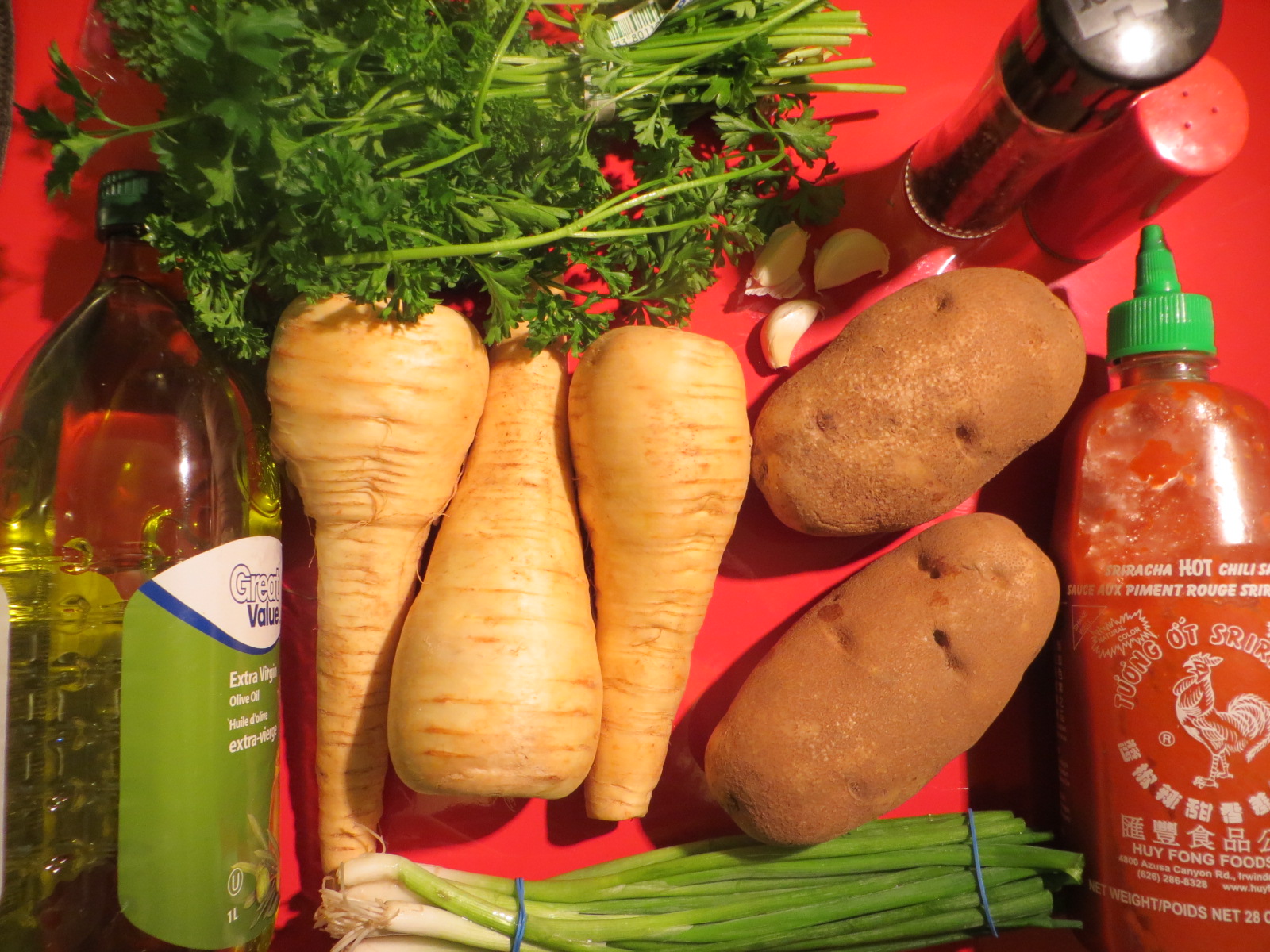
Ingredients:

  • 3 large parsnips
  • 2 tbsp extra-virgin olive oil, plus more for frying
  • 2 large russet potatoes
  • 1 bunch green onions, green part only, sliced diagonally (they cookbook doesn't specify how thinly they should be sliced, but I tried to keep them reasonably fine)
  • 1/4 cup chopped flat-leaf Italian parsley (I had to make a necessary compromise with regular parsley because that's all the grocery store had and I wasn't bicycling through a rainstorm to find a single bunch of Italian parsley. Sue me.)
  • 3 cloves garlic, minced
  • 1/4 cup Sriracha
  • salt and pepper to season
The cookbook recommends vegan sour cream or applesauce as optional toppings.


Following the cookbook recipe exactly:


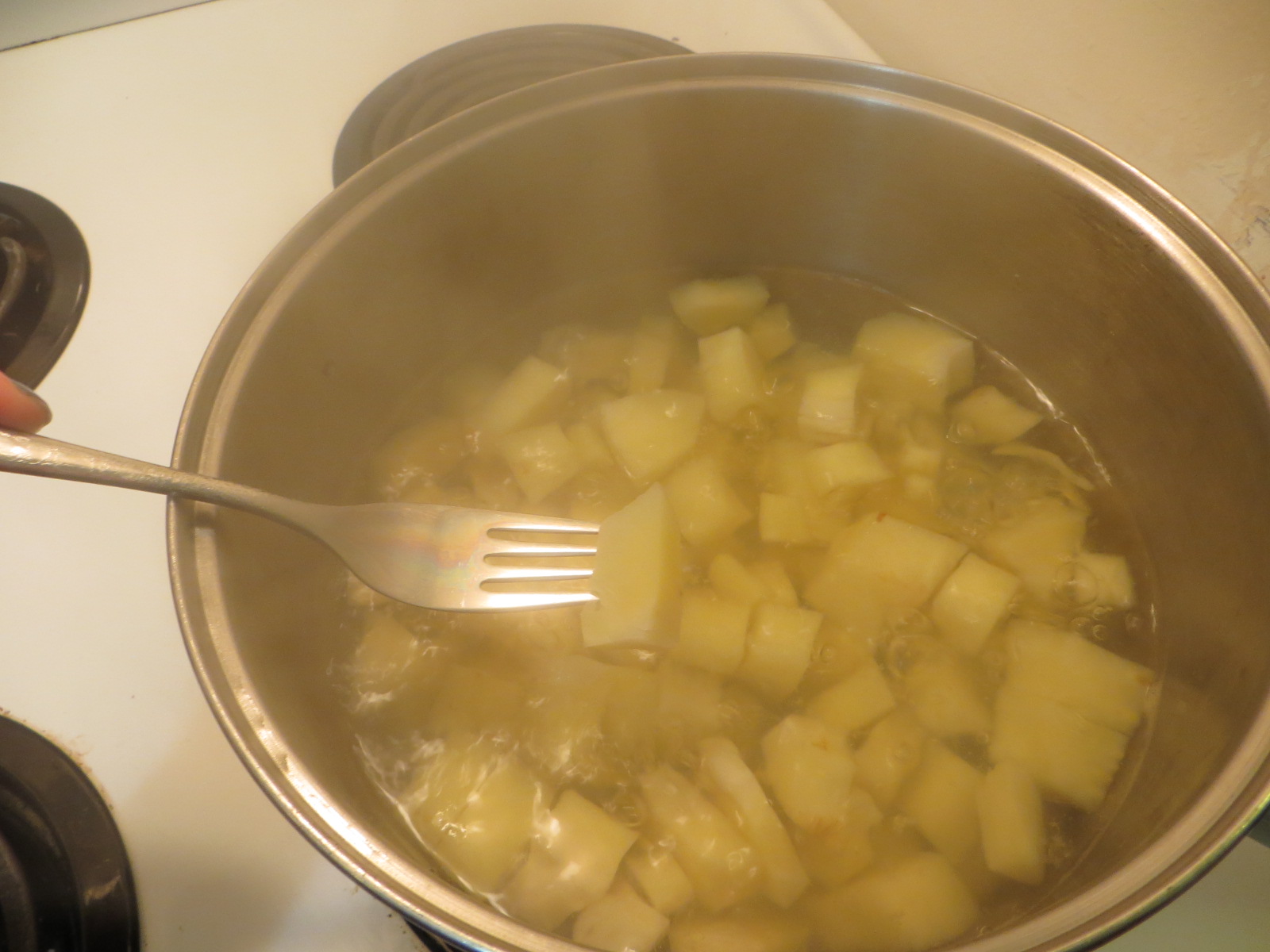
1. Bring 1/2 inch of water (an oddly specific amount for this) to a simmer over medium. Dice two of the parsnips (the cookbook doesn't specific if you peel them or not, but parsnips can be kinda grubby and hairy, so I took that as unspoken) and simmer in the water for five minutes, until fork-tender.

Goopy goodness

2. Drain the parsnips and pat dry with a clean towel or paper towel. What the cookbook does not mention is that these parsnips will still be incredibly hot, so good luck if you use a paper towel. Put the parsnips in a blender and while the blender is running, dribble in the 2 tbsp of olive oil, processing until smooth. The blender will goop up at this, but fortunately scraping down the sides with a spatula helps blend the mashed parsnips as well as the blades do.

3. Since this recipe makes several batches of latkes, the cookbook recommends you preheat your oven to 200F and put a wire rack on a tray or a foil lined baking sheet in the oven to transfer your latkes to as you cook them in order to keep them warm. I did do this step, but since I'm just cooking for myself and planning to refrigerate the leftovers, it's wasn't super necessary for me.

Take THAT

4. Peel and grate the remaining parsnip and the potatoes. Squeeze the grated roots by hand in a strainer over the sink to press out as much water as possible.


5. In a large bowl, mix the grated roots, the mashed parsnips, green onions, parsley, garlic, and Sriracha. Mix well and season.


6. Heat about 1/4 inch oil in a large skillet to a high heat. Take about 1/4 cup of mixture and form it into flat patties about 1/2 inch thick. Fry in the oil for 4 minutes each side, until crisp and dark brown. Keep warm in the oven as you fry more batches. The cookbook doesn't mention it, but you likely will have to add more oil between batches.

The Outcome:

So shiny!

Man, I don't know. Hot out the pan, the taste is pretty good. There is a distinct parsnip flavour that goes well with the Sriracha. However, the consistency is a bit off - the mashed parsnip doesn't hold it together as well as it should, and despite the high heat and the straining, these are soggier and oilier than normal latkes. I'm havering about these - I like the idea of parsnip and Sriracha latkes. I would probably remake these with egg and flour added - unfortunately the egg destroys the whole vegan intention of this recipe.

Thursday, 12 November 2015

Sriracha-Mango Guacamole [The Veggie-Lover's Sriracha Cookbook]


The major downside of produce-heavy recipes like the ones in the Veggie-Lover's Sriracha cookbook is the simple fact that getting fresh produce sucks in Canada. It's going to be out of stock, half-ripe, cost more than an entire meal at Tim Horton's, or look like it was kicked all the way from California to Canada. However, I love mangoes, and even if they're a bit out of season in Canada, when I saw this recipe I really needed to try it. It's guac, it's spicy, and it has mango in it - though there is the weakness that there's just no way to find big soft juicy mangoes in this part of the world right now.

Cookbook Recipe:


Ingredients:

  • 3 large, ripe, Hass avocados (the varietal with the darker skin - the good news is that's the only kind we get here)
  • juice of 2 limes
  • 1 large mango, diced (I feel a bit let down by this mango - I went to three grocery stores before I even found any mangoes, and this was the "ripest" - it's dry as a bone but it is technically a mango)
  • 1/4 cup diced red onion
  • 1/4 cup chopped cilantro plus more as garnish
  • 1/4 cup Sriracha
  • 2 cloves garlic, minced
  • 1 1/2 tsp cumin
  • salt and fresh ground pepper

Following the cookbook recipe exactly:


1. Halve and pit the avocados, scooping the flesh into a bowl. Top with lime juice and mash the avocados with a fork until "relatively smooth". The lime juice should also keep it from browning, however, as we see later, this concern is rendered moot.

Dry as a bone.

2. Add most of the mango, leaving a few pieces for garnish, plus the onion, cilantro, Sriracha, garlic, and cumin. Mix it well and season. You'll now see why browning isn't a big concern, as the red Sriracha turns the green avocados into a colour I can only describe as "cat barf".


3. Cover with plastic wrap, pressing the plastic wrap onto the surface of the guacamole, and refrigerate for at least 30 minutes. Garnish with reserved mango and cilantro.

Outcome:

I'm sorry I put the image of cat barf into your minds. It's actually very tasty. The guac, not cat barf.

I really wish I had waited to try this recipe when mangoes were in season. Colour aside, it's really tasty - it's a good solid guac with a nice spicy kick. The mango taste is very subtle and gets a bit overwhelmed by the spice, but I think this is more due to my shitty dry mango than the recipe. But once you get over the colour, it's really tasty and pretty easy to make.

Tuesday, 10 November 2015

Mouth on Fire Minestrone [The Veggie-Lover's Sriracha Cookbook]


I'm easing into the vegan Sriracha cookbook with their minestrone recipe. Minestrone is pretty flexible, though this one is interesting as they omit pasta completely, it's just beans and veggies. They offer the liberty of switching up for whatever veggies are in season, but that's not the name of the game here.

Cookbook Recipe:


Ingredients:

  • 4 cups vegetable stock
  • 1/4 cup Sriracha
  • 6 Roma tomatoes, diced (due to some cosmic joke, my grocery store only had 5 Roma tomatoes, so I made the necessary substitution of adding one small non-Roma tomato)
  • 3 carrots, chopped
  • 3 stalks of celery, chopped
  • 1 red onion, diced
  • 1 large zucchini, halved lengthwise and diced (zucchini options were limited at the grocery store, I think this one's been in a fight)
  • 3 cloves garlic, minced
  • 2 bay leaves
  • 1 tbsp minced fresh oregano or 1 1/2 tsp dried. I went with dried.
  • 1 3/4 cups cooked canned cannellini beans or 1 undrained 443 ml / 15 oz can (I could only find a larger can, so I've saved extra beans some for a salad or pasta later)
  • 1 bunch kale, stemmed and chopped
  • juice of 1 lemon
  • salt and fresh ground pepper

Following the cookbook recipe exactly:


1. Basically, into a big pot on high heat, chuck most of the ingredients: the stock, Sriracha, tomatoes, carrots, celery, onion, zucchini, garlic, bay leaves, and oregano. Bring it to a boil, lower heat, cover, and let simmer for 15 minutes.

Thank god kale boils down.
2. Remove the bay leaves and add the kale and beans. Simmer for about 5 to 7 minutes more.


3. Stir in the lemon juice, season, and serve.

The Outcome:


This is a pretty tasty soup - it's at a right juncture of hearty and healthy where you feel full without feeling gross. The Sriracha gives it a bit of zing but doesn't overwhelm (my mouth definitely isn't on fire, though). It's a pretty straightforward recipe, and really easy - plus it helps you get your veggies in! The only problem I would have with it is adding the lemon juice at the very end - it comes off a bit too strong and distinct. I would give the lemon time to really combine in, maybe add it a minute before you stop cooking. The lemon does meld in nicely when you let the soup sit and then reheat it. I would definitely use this as a good base recipe, it makes a lot of soup and the author is right - it's minestrone, you can add pretty much whatever veggies you want.